


Insurance Surety Bond for Outdoor Seating (Dehors) in Florence: Practical Guide to the New 2026 Regulation
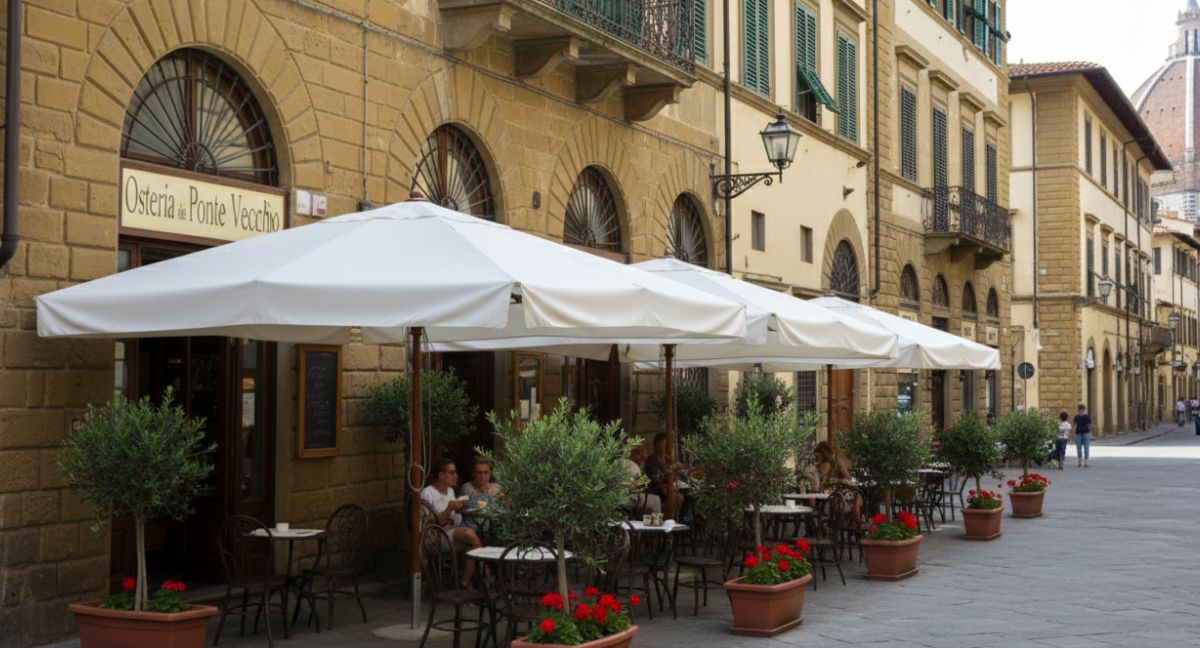
The New Dehors Regulation: What Changes from 2026
Florence is preparing for a major shift in the rules governing outdoor seating (dehors) and public land concessions. Starting in January 2026, a new regulation will come into force, completely redefining the relationship between the City of Florence and the owners of bars, restaurants, and venues that occupy sidewalks and squares with tables and outdoor structures.
The Economic Development Commission has approved a draft regulation that introduces stricter obligations, harsher penalties, and a reduction in the amount of space that can be granted. According to the Councillor for Economic Development, Giovanni Vicini, the goal is twofold: to restore urban livability for residents of the historic center and to put an end to long-standing abuses in certain areas of the city.
What changes in practice? The previous allowance that permitted a 10% increase in concessible surface area has been eliminated. The maximum total area allocated to outdoor seating in the historic center is now capped at 12,600 square meters, a significant reduction compared to the past. For business owners, this means fewer tables, fewer seats, and potentially lower revenues.
But the real novelty—and the most controversial point—is another one: the mandatory insurance surety bond required to obtain or renew a public land concession.
In short: From 2026, less space for outdoor seating and a mandatory surety bond to guarantee the restoration of public land.
Talk to our specialists in real time:
The positive reviews from our clients are tangible proof of our excellence. Read our customer testimonials to see what people who have experienced our services are saying.
The Insurance Surety Bond: The Core Controversy
A surety bond is a financial guarantee that the business owner must provide to the Municipality. In practice, an insurance company or bank commits to covering any damage caused by the occupation of public land or to ensuring the restoration of the original conditions in case of non-compliance.
For venue owners, this represents an additional cost, on top of concession fees, taxes, and administrative expenses. It is far from symbolic: depending on the size of the outdoor area and contractual conditions, an insurance surety bond can cost several thousand euros per year.
Both Confcommercio and Confesercenti have strongly opposed this obligation, describing it as excessive and punitive for a sector already under pressure. Trade associations argue that a simple cash deposit or bank guarantee would be more sustainable and would avoid immobilizing capital or paying annual insurance premiums.
However, Palazzo Vecchio (City Hall) shows no intention of stepping back. The surety bond is seen as an essential tool to protect public assets and discourage irregular behavior. The message is clear: anyone who wants to use public space must prove reliability and financial soundness.
In addition to the surety bond, the new regulation introduces another contested requirement: mandatory consent from neighboring condominium owners. This rule risks further complicating the authorization process, especially in the UNESCO-listed historic center, where property ownership is fragmented and relations between neighbors are often difficult.
In short: The insurance surety bond protects the Municipality but weighs heavily on businesses, which are calling for lighter alternatives.
Deadlines and Timing: When to Act
The new regulation officially enters into force in January 2026, but existing concessions will benefit from a technical extension until March 15, 2026. This time window is crucial for businesses with active outdoor seating: by that date, they must comply with the new rules and submit a renewal request complete with all required documentation, including the surety bond.
For those planning to open a new outdoor seating area or modify an existing one, it is strongly advisable to act early. Administrative procedures, condominium approvals, and the activation of a surety bond can take weeks, if not months.
Operational timeline:
- January 2026: New regulation enters into force
- March 15, 2026: Deadline for renewing existing concessions
- By February 2026: Recommended to start procedures to avoid delays
Failure to meet deadlines results in automatic loss of the concession, removal of the outdoor seating, and inability to operate outdoors during the most profitable spring and summer seasons.
Penalties: What You Risk If You Don’t Comply
The new regulation introduces a much stricter penalty system. The Municipality intends to send a strong message against abuse and unauthorized occupation of public land.
- Loss of concession Two violations within one calendar year lead to automatic revocation, with no exceptions.
- Forced closures Unauthorized occupation can result in immediate removal of structures, heavy fines, and bans on new applications for up to three years.
- Financial penalties Fines vary based on the severity, surface area, and duration of the violation.
The objective of Palazzo Vecchio is clear: to turn Florence into a model of legality and urban decorum, especially in the UNESCO area, where the city’s image is showcased every day in front of millions of tourists.
For business owners, this means there will no longer be any room for improvisation or administrative “grey areas.
Two violations in one year and you lose your concession. The City is taking enforcement seriously.
UNESCO Area and Historic Center: Stricter Rules
Florence’s historic center has been a UNESCO World Heritage Site since 1982. This status comes with responsibilities and constraints that also affect the management of public space. The streets, squares, and alleys at the heart of the city are not just places of commerce, but settings of inestimable cultural value that must be preserved.
Under the new regulation, the UNESCO area is subject to even stricter requirements than the rest of the municipal territory. Outdoor seating structures (dehors) must comply with precise aesthetic criteria: natural materials, subdued colors, and the absence of intrusive advertising signs. Every element must blend harmoniously with the surrounding historic architecture.
The reduction of the allowable surface area particularly affects this zone. Many establishments will have to give up tables and chairs that currently occupy narrow sidewalks or corners of squares. The administration’s priority is to ensure pedestrian circulation and to return non-commercial social spaces to residents.
Urban livability has become a key term in the Florentine political debate. For years, citizen committees have criticized the transformation of the historic center into a tourist amusement park, with outdoor seating everywhere and little freedom to walk. The new regulation seeks to respond to these concerns, even at the cost of upsetting part of the business community.
Requests from Confcommercio and Confesercenti
Trade associations have not held back their criticism of the new regulation. Confcommercio and Confesercenti have expressed serious doubts about the economic sustainability of the proposed measures and their effectiveness in achieving the stated objectives.
Initial requests:
- Replace the guarantee bond with a cash deposit:
Instead of relying on insurance companies with annual costs, it would be sufficient to pay a sum as a guarantee, which would be returned at the end of the concession period if no violations occur. - Extend the duration of concessions to 7 years: The current concessions are considered too short to amortize investments in furniture, structures, and outdoor heating systems. A seven-year term would allow business owners to plan more effectively and better absorb the initial costs.
- Eliminate the requirement for condominium consent:
This constraint risks paralyzing authorizations, especially in buildings with conflicting condominium owners or owners who are difficult to trace.
Negotiations between the Municipality and trade associations are still ongoing. In the coming weeks, adjustments to the text may be made before final approval by the city council. However, Councillor Vicini has already made it clear that on certain points—such as the guarantee bond—there is no room for negotiation.
The Florentine business community feels under siege: on one side, competition from online commerce; on the other, rising operating costs, prohibitive rents in the historic center, and now even stricter regulation. Many business owners fear that the new regulation could force some establishments to close, especially smaller, family-run venues.
Who to contact for a guarantee bond in Florence
If you run a business in Florence and need to comply with the new requirement, the first question you will ask is: where can I obtain an insurance guarantee bond for outdoor seating (dehors)?
The answer is not straightforward. Not all insurance companies offer this type of guarantee, and costs can vary significantly depending on the risk profile, the size of the outdoor area, and the duration of the coverage.
Italia Fideiussioni It is the ideal partner for those seeking a fast, transparent, and competitive solution. Based in Florence and with years of experience in guarantee bonds for public concessions, Italia Fideiussioni offers a comprehensive service that supports you at every stage:
- Free analysis of your situation:
A consultant evaluates the characteristics of your outdoor seating area and provides a detailed, no-obligation quote. - Fast procedures:
The required documentation is handled digitally, significantly reducing waiting times. - Ongoing assistance: You are not left on your own after activation. The Italia Fideiussioni team supports you in the event of municipal inspections, renewals, or changes to the concession.
- Clear, fixed costs: No surprises. The insurance premium is defined in advance and remains fixed for the entire duration of the contract.
You can request a quote by ccontacting the office directly.
The consultation is free and allows you to understand exactly how much the guarantee bond will cost before making any decision.
At a time when every euro counts, relying on a specialized intermediary can make the difference between a procedure completed in just a few days and a bureaucratic ordeal that costs you valuable weeks. Italia Fideiussioni understands the dynamics of the Municipality of Florence, the administrative procedures, and the required documentation, and can guide you step by step toward bringing your outdoor seating area into compliance.
Don’t wait until the last minute. Deadlines are approaching, and those who act early will have more opportunities to secure the best conditions and avoid delays.
FAQ – Frequently Asked Questions
Act now to avoid being left out
Florence’s new outdoor seating regulation marks a historic turning point for the city. On one hand, the municipal administration aims to restore legality and urban decorum in the historic center, returning space to residents and protecting the UNESCO heritage. On the other hand, business owners are faced with higher financial burdens and more complex authorization procedures.
The insurance guarantee bond is the most controversial aspect, but it is also an обязательный step for anyone who wants to continue operating with outdoor seating. Do not underestimate the importance of acting early: deadlines are tight, and those who wait until the last minute risk finding themselves without coverage and without a concession just as the season reaches its peak.
Rely on Italia Fideiussioni to obtain your guarantee bond quickly and with no surprises. Visit www.italiafideiussioni.it and request a free quote today. Expert guidance can make the difference between a business that is fully compliant and one forced to close its doors.
Talk to our specialists in real time:
The positive reviews from our clients are tangible proof of our excellence. Read our customer testimonials to see what people who have experienced our services are saying.
Articolo pubblicato il 30 December 2025, ultimo aggiornamento 07 January 2026


