


Catastrophic Insurance Policies 2026: complete guide to business requirements and home parotection
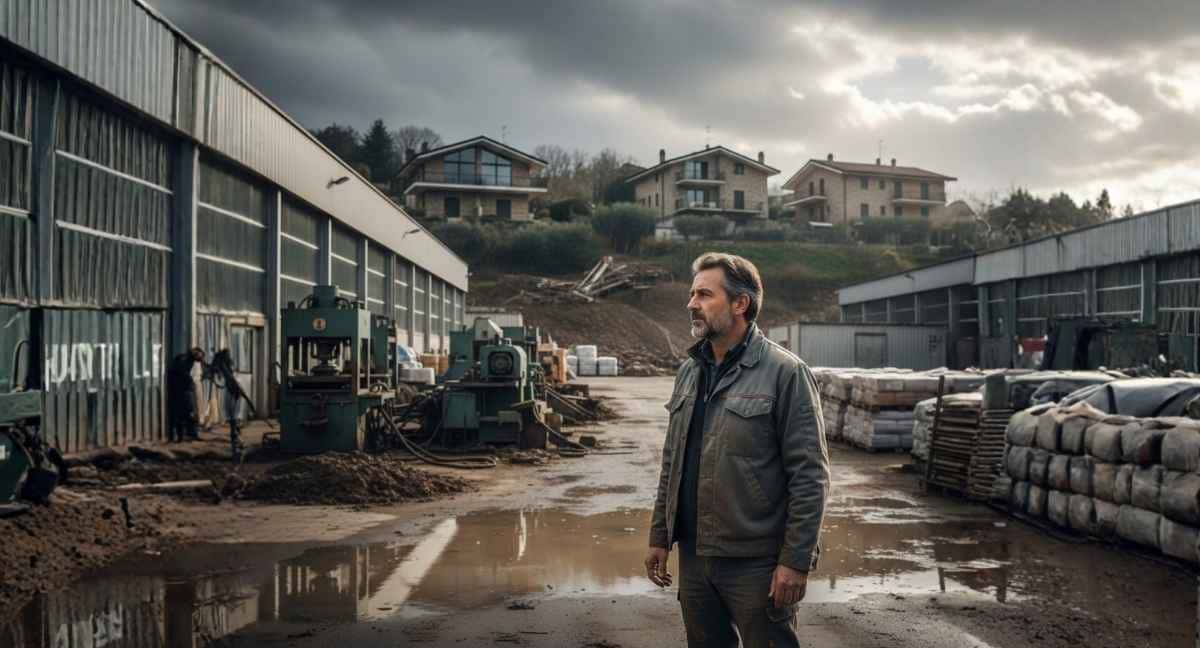
When Nature Sends the Bill: A Wake-Up Call
Picture this: You arrive at your warehouse on a Monday morning. The weekend storm has left three feet of water inside. Your equipment is ruined, your inventory destroyed, and decades of hard work seem to have vanished overnight. This isn’t a nightmare, it’s the harsh reality facing thousands of Italian business owners every year.
Between 2010 and 2023, extreme weather events in Italy surged by 240%according to ISPRA data. Floods wipe out entire production facilities, earthquakes halt supply chains for months, and landslides cut off access to industrial zones without warning.
Italy’s answer? A revolutionary mandatory insurance system launched in 2025. Under the 2024 Budget Law (No. 213/2023) and its implementing Ministerial Decree No. 18 of January 30, 2025, every Italian business must now carry catastrophic event coverage. This isn’t optional anymore—it’s the law.
But here’s the twist: while businesses face this obligation, smart homeowners are also discovering why protecting their property from natural disasters makes absolute financial sense. Let’s explore both angles.
Who Must Get Covered (And Why It Matters)
The Legal Mandate for Businesses
Decree No. 18/2025 establishes crystal-clear requirements: any company with legal headquarters in Italy (or foreign companies with permanent establishments here) registered in the Business Registry must obtain catastrophic damage insurance.
Required to comply:
- All companies in the Business Registry (regardless of section—ordinary, special, or REA)
- Limited liability companies (Srl, Spa, Sapa)
- Partnerships (Snc, Sas)
- Sole proprietorships
- Cooperatives
- Business consortiums
- Foreign businesses with Italian operations
Exempt from requirements:
- Agricultural enterprises (Article 2135 of the Civil Code): farms engaged in cultivation, livestock, forestry and related activities
- Licensed professionals (lawyers, accountants, doctors) operating outside corporate structures
What Assets Need Protection
The obligation covers assets classified under Article 2424 of the Civil Code, Section Assets, Item B-II, numbers 1), 2) and 3):
MUST be insured:
- Land and buildings (warehouses, offices, storage facilities, retail spaces)
- Plants and machinery (production lines, HVAC systems, generators)
- Industrial and commercial equipment (tools, shelving, workstations, transport systems not registered with PRA)
EXCLUDED from requirements:
- Vehicles registered with PRA (company cars, vans, trucks)
- Professional fishing vessels (categories 1-6 under DPR 1639/1968)
- Buildings under construction (classified as B-II number 5)
- Properties with building code violations or constructed without proper permits
- Assets already covered by another catastrophic policy (even if purchased by third parties)
The Rental Puzzle: Who Pays When You Don’t Own?
One common question concerns non-owned assets. The law is unambiguous: the obligation falls on whoever uses the asset for business operations, not the owner.
Real-world scenario: A manufacturing company leasing a production facility must insure it against catastrophic risks, even though they don’t own the building. The exception? If the property owner already maintains catastrophic coverage that extends to the tenant’s assets, the requirement is satisfied.
Remote work consideration: Entrepreneurs operating from home must insure only the portion of their residence actually used for business (e.g., a ground-floor professional office).
Coverage Deep Dive: What’s Actually Protected
Covered Catastrophic Events
CAT-NAT (Catastrophe Naturelle) policies must include protection against:
- Earthquakes (seismic activity, seaquakes, tsunamis)
- Flooding (river overflow, exceptional rainfall accumulation)
- Landslides (mudslides, ground movements, soil collapse)
- Inundation (from extreme meteorological phenomena)
Understanding Deductibles and Limits
The system requires mandatory cost-sharing:
- Minimum 10% deductible on verified damages
- Minimum coverage limits equal to insured asset values (with technical caps defined by decree)
- Retention amount: the percentage permanently borne by the business
Practical example: A flood causes €100,000 in damage to your facility. With a 10% deductible, insurance pays €90,000 while you absorb €10,000 out of pocket.
Implementation Timeline and Compliance Options
Current Deadlines (Decree-Law 39/2025)
The government granted differentiated grace periods:
- Large enterprises: deadline already passed in 2024
- Medium enterprises: March 31, 2025
- Micro and small businesses: March 31, 2025
- Specific sectors (hospitality, fishing): extended deadlines still being determined
Collective Policies: Strength in Numbers
Companies can fulfill obligations through collective policies, particularly beneficial for:
- Business consortiums
- Trade associations
- Industrial districts
This approach often secures superior terms through collective bargaining power.
Adapting Existing Coverage
If your business already maintains general damage insurance covering some natural events, you don’t need to start from scratch. Policy updates to meet new standards occur at the first renewal or premium payment following decree implementation.
Consequences of Non-Compliance
No Fines, But Serious Implications
The law doesn’t impose criminal or administrative penalties, but introduces a concrete consequence: loss of access to public funding.
Article 1, paragraph 102, of Law 213/2023 mandates that insurance non-compliance “must be considered” when allocating:
- Direct grants
- Regional or national subsidies
- Tax incentives for investments
- Public innovation programs
The MIMIT Decree of June 18, 2025 already operationalized this provision for benefits managed by the General Directorate for Business Incentives. Other agencies will follow suit.
Critical point: this provision is not retroactive. Funding obtained before deadlines won’t be revoked.
Why Homeowners Should Consider Coverage Too
The Case for Voluntary Protection
Though only businesses face legal requirements, increasing numbers of Italian families are voluntarily protecting their homes. The reasons are compelling:
- Italy’s Geological Vulnerability
- 93.9% of Italian municipalities face hydrogeological risk (ISPRA 2024 data)
- Over 7 million people live in high seismic hazard zones
- Climate change is making extreme events increasingly frequent
- Limited Government Assistance Contrary to popular belief, the State intervenes only in exceptional cases after declaring natural calamity states. Compensation is partial and may take years to arrive.
- Real Estate as Primary Wealth For most Italian families, homes represent 60-70% of total wealth. Leaving this unprotected creates enormous financial vulnerability.
Cost Considerations for Homeowners
Residential premiums vary based on:
- Geographic location (seismic and hydrogeological classification)
- Construction type (reinforced concrete, masonry, wood)
- Building age (newer structures = better seismic standards)
- Property value
On average, for a €200,000 home in medium-risk zones, annual premiums range from €250 to €600, with typical deductibles of 10-15%.
Essential FAQ: Navigating the Requirements
Selecting the Right Policy
For Businesses: Essential Criteria
When comparing offers, verify:
- Full regulatory compliance(Decree 18/2025)
- Coverage of all mandatory events(earthquake, flood, landslide)
- Adequate limitsmatching actual asset values
- Clear deductible terms(percentage and minimum amounts)
- Claims settlement timeframes
- Specialized assistance(adjusters, administrative support)
- Collective policy options if you’re in a consortium
For Homeowners: Protecting What Matters
If you’re a citizen wanting to protect your home:
- Assess your territory’s risk profile (INGV maps for seismic, PAI for hydrogeological)
- Choose modular coverage (structure only, contents only, or both)
- Consider accessory expenses (temporary housing, demolition, debris removal)
- Review exclusions (some policies exclude basements, garages, gardens)
- Compare multiple quotes through independent brokers
Taking Action: Next Steps and Conclusions
Italy’s mandatory catastrophic insurance system represents a historic turning point. For the first time, the nation has established structural protection for its productive fabric against extreme natural events, moving beyond emergency post-disaster compensation logic.
For businesses, the obligation is clear: by the established deadlines, all Registry-registered companies (excluding agricultural) must achieve compliance. Failing to do so means not only risking corporate assets but also foreclosing access to public funding essential for growth and innovation.
For private citizens, though not legally required, the decision to insure becomes more rational each year. With extreme weather events rising exponentially and state intervention increasingly limited, protecting your home means protecting a lifetime’s work.
Immediate Action Steps
If you’re a business:
- Confirm your deadline (large, medium, micro/small enterprise)
- Inventory assets requiring coverage (Art. 2424 c.c.)
- Request at least 3 quotes from different insurers
- Compare coverage, deductibles, and assistance
- Secure coverage before your deadline to avoid funding complications
If you’re a homeowner:
- Consult risk maps for your municipality (Civil Protection website)
- Estimate your property and contents value
- Request personalized quotes
- Evaluate extending coverage to accessory damages
- Consider policies with 24/7 emergency assistance
Partner with Specialists
Navigating decrees, coverage limits, deductibles, and policy clauses isn’t simple. A specialized broker like polizzaanticatastrofi.it makes the difference:
- Objective comparison across all market insurers
- Regulatory guidance updated on obligations and deadlines
- Customized coverage for your specific assets
- Support during purchase and claims processes
- Cost-benefit optimization
Don’t wait for disaster to strike. Catastrophic events give no warning. The law now requires businesses to protect themselves, but also offers the opportunity to do so most efficiently and effectively.


